
The Roots of Hope
Will our better angels prevail?

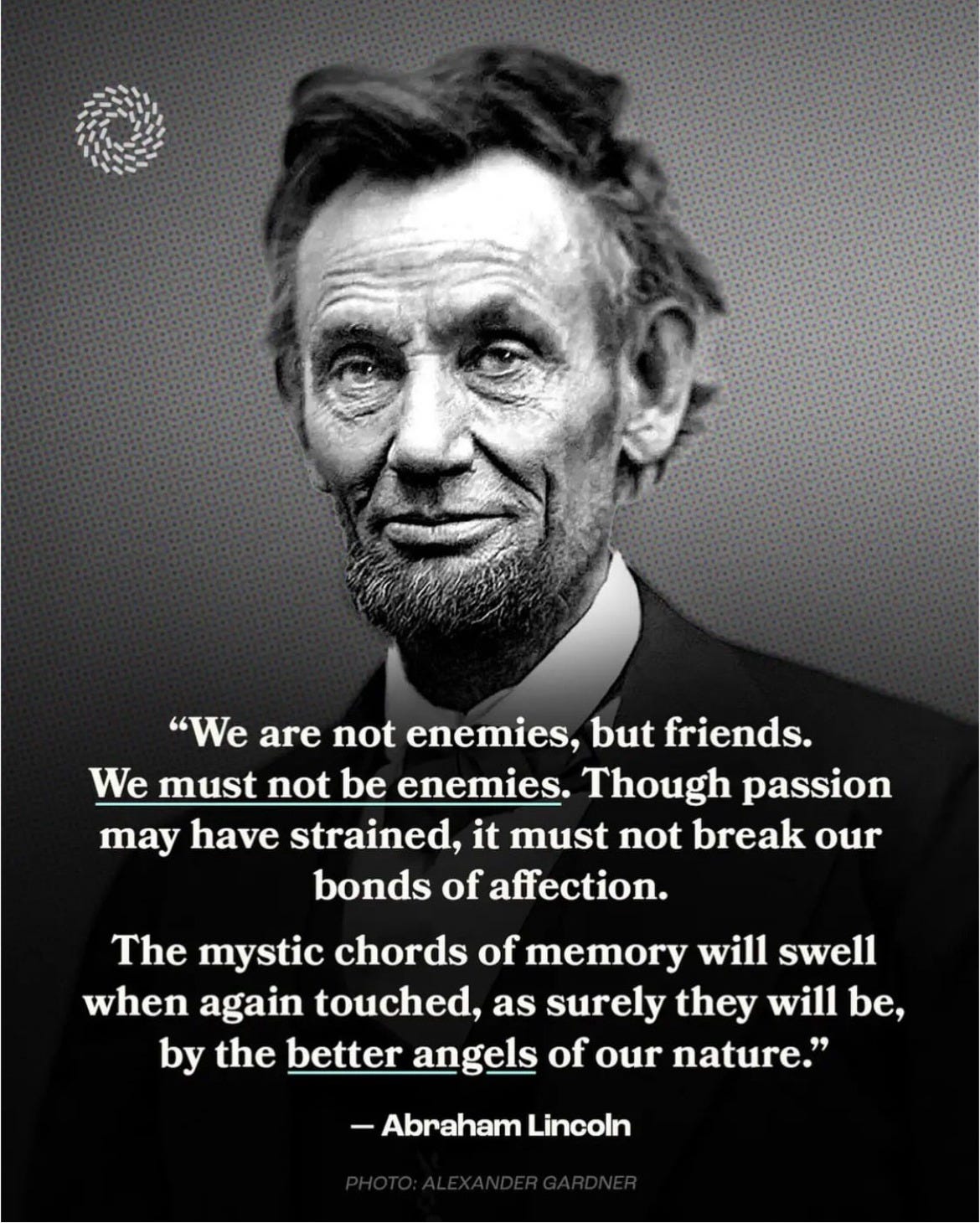
“The mystic chords of memory, stretching from every battlefield and patriot grave to every living heart and hearthstone all over this broad land, will yet swell the chorus of the Union, when again touched, as surely they will be, by the better angels of our nature.”
—President Abraham Lincoln, First Inaugural Address, 1861
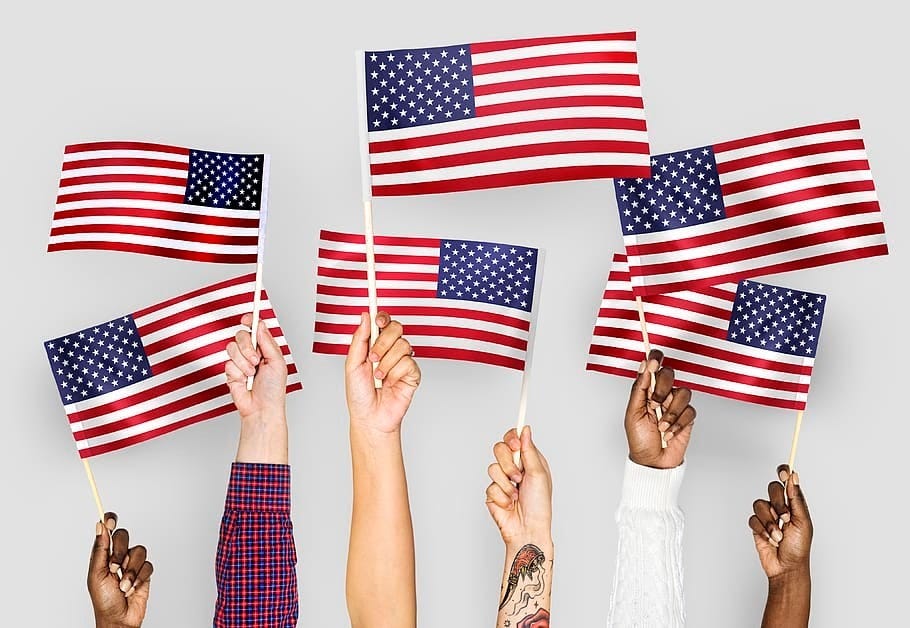
Yesterday, as America marked its 250th birthday in a scorching heat wave, we gathered with long-time friends in their comfortable, air-conditioned home. Only the husband-half of our gracious hosts braved the feels like 107°F heat to grill the traditional picnic fare while the rest of us arranged the buffet inside. We wore red, white, and blue. Our beloved and imperfect nation’s flag was prominently displayed.
As the years go by, this semi-amorphous group seems to appreciate one another more and more. We trade updates about our now-grown children, upcoming travels, and yes, the increasing indignities of aging. Beneath the conversation runs a quiet current of gratitude that we can still gather, laugh, debate, and simply enjoy one another’s company. Without the frantic pace that defined our younger lives, another signal comes through more clearly: friends are precious. Time is fleeting. We need one another.
Just another day in America.
Before a frenzied summer squall with 75-mile-per-hour winds sent us scrambling to batten down the hatches—leaving us to navigate a power outage and nature’s chaotic, uninvited branch-pruning—we had already moved beyond small talk. Sitting together in the strange calm before the storm, we found ourselves talking about another kind of weather entirely.
Today’s ideological divisions have become their own violent gale, leaving many of us to navigate a fractured landscape of trimmed friendships, strained family ties, and the exhausting cleanup that follows. We spoke honestly about the tension between remaining connected to people we have loved and remaining faithful to our own moral compass. At what point does preserving a relationship begin to feel like betraying one’s own humanity? How do we remain connected to people whose choices help sustain systems of exclusion, cruelty, or domination?
To love one’s country is not to avert one’s eyes.
We cannot afford the luxury of a naïve brand of patriotism that insists the storm is harmless or that its damage is normal. Love worthy of a democracy requires looking directly at assaults on the principles that make democracy possible: the weakening of public institutions, the erosion of constitutional protections, the targeting of vulnerable communities, and the steady normalization of political violence and intimidation.
Sometimes an entire era is captured in a single image…
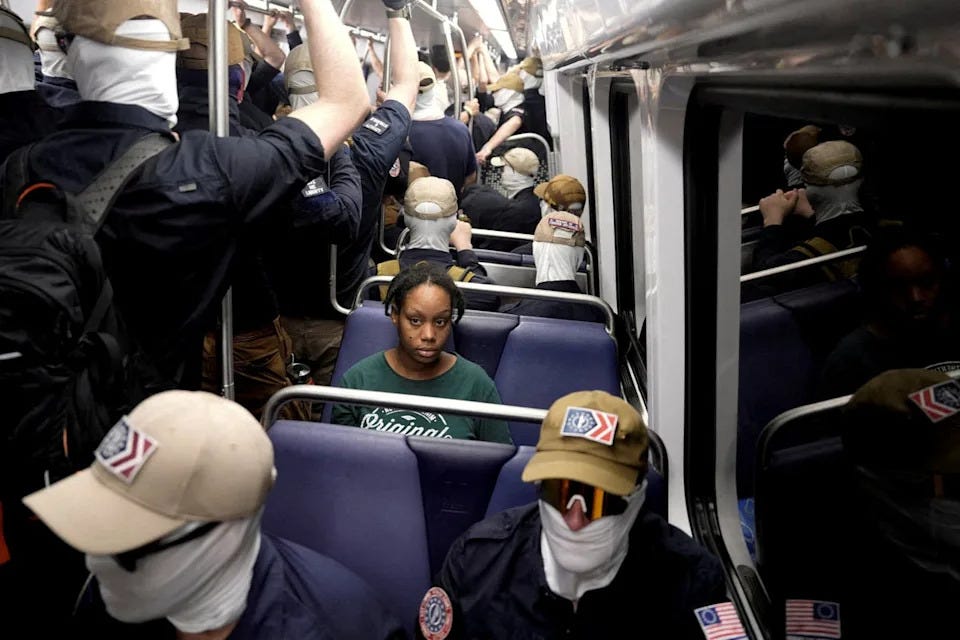
On this Fourth of July — America’s 250th Birthday — a photograph taken on a Washington, D.C. Metro train showed a lone Black woman seated quietly while masked members of a white nationalist group surrounded her on every side. They would later march near the Capitol carrying Confederate flags. Looking at this photograph, it becomes impossible to pretend that our darker impulses belong only to history. It is present tense.
There is no olive branch to be offered to organized hatred. We do not owe compromise to cruelty.
Neither can we surrender to despair.
Our survival—and authentic patriotism—depend upon refusing resignation. The work before us is not merely resistance; it is renewal. It is a fierce recommitment to the promises embedded in our founding documents and expanded, generation after generation, by Americans who insisted those promises belong to everyone.
That work is sustained not only by outrage but also by joy.
We glimpse it in neighborhoods that celebrate together across differences. We see it in sporting events that dissolve our usual boundaries into shared delight. We see it as the World Cup arrives on American soil, reminding us that the beautiful game flourishes because of diversity, cooperation, and joyful participation. We saw it during the No Kings demonstrations, where millions gathered not only to reject authoritarianism but to discover one another again. What might have become a movement fueled only by anger instead became an affirmation of community itself.

Perhaps this is how we steady our moral compasses.
The political storms may tear at the branches of our relationships, but they cannot kill the roots of our need for one another. The opposite of authoritarianism is not simply democracy. It is healthy relationship. It is the stubborn human instinct to gather around tables, fill parks and streets, sing, march, celebrate, mourn, and begin again together.
Hope, then, is not optimism. It is practice.
It is choosing, again and again, to believe that our better angels are stubborn indeed. It is refusing to let cruelty become ordinary or cynicism become wisdom. It is hearing, even above the noise of the storm, Lincoln’s mystic chords calling us back to one another—and answering with voices strong enough to swell the chorus once more.
May we keep choosing one another.

May you live in ease and kindness, with a free heart.
Barbara Shirvis works with individuals seeking voice work — literally and metaphorically.
• Singing lessons: www.WAVS.info
• Well Coaching: www.BarbaraShirvisWellness.com
Well written and well stated Barbara. What have we if not for hope?